
Blog
How to Manage Seasonal Demand for Mobile Accessories

How to Manage Seasonal Demand for Mobile Accessories: A Guide for Retailers
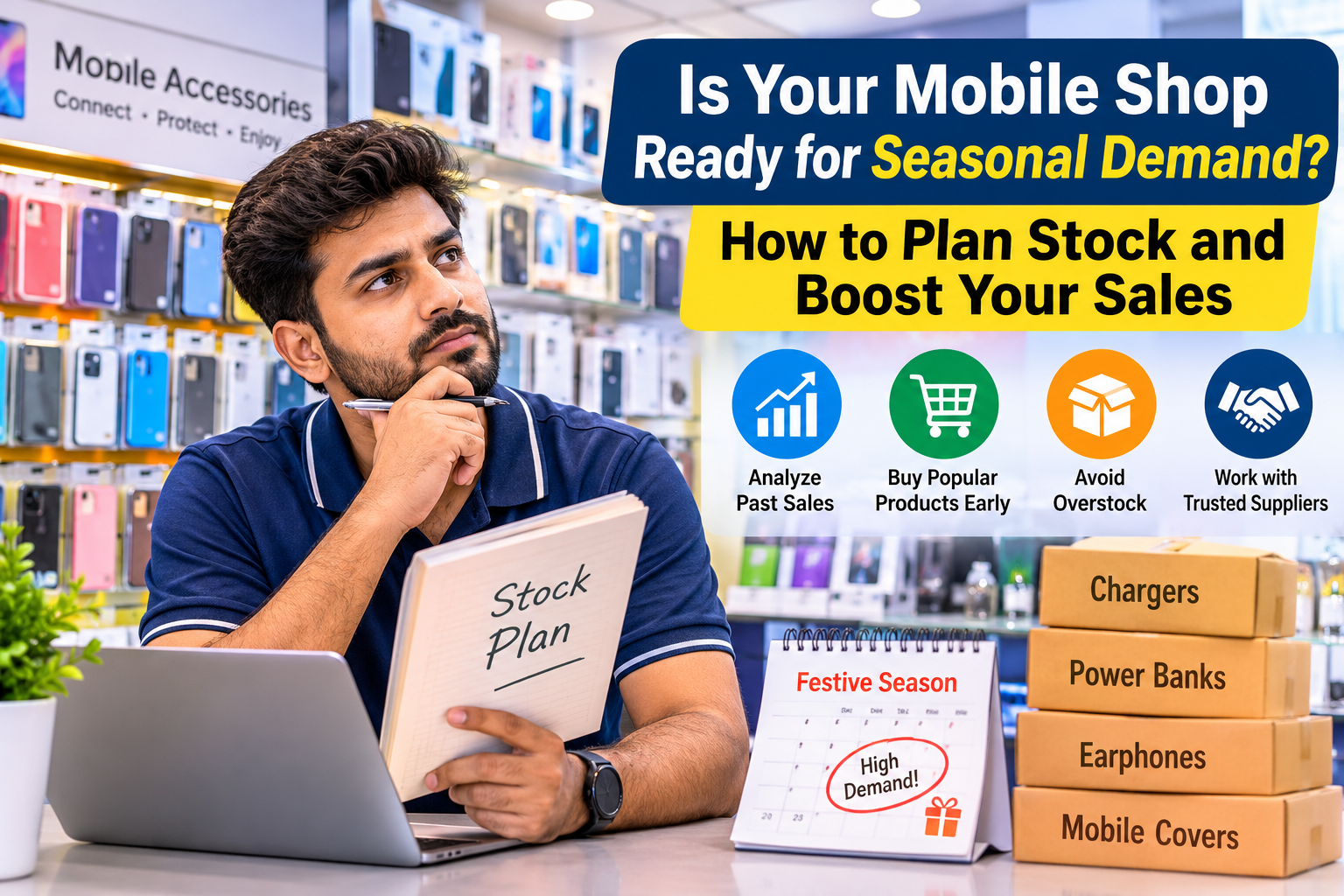
The mobile accessories market changes throughout the year. Customer demand can increase during festivals, holiday seasons, special sales, and the launch of new smartphones. For retailers and wholesalers, understanding these changes is important for managing stock and avoiding unnecessary expenses.
Some products sell quickly during particular seasons, while others maintain steady demand throughout the year. Planning inventory according to customer needs can help businesses improve sales and manage their budgets more effectively.
In this guide, we will discuss practical ways to manage seasonal demand for mobile accessories.
1. Understand Customer Buying Patterns
The first step is to understand which products customers purchase most frequently and when demand usually increases.
For example, demand for charging cables, power banks, earphones, mobile covers, and screen protectors may rise during festive shopping periods or promotional sales.
Review previous sales records and identify which products performed well during different months. This information can help you prepare inventory before demand increases.
2. Plan Stock Before Festival Seasons
Festivals and special shopping occasions can create additional demand for mobile accessories.
Retailers should plan their purchases in advance instead of waiting until products start selling out. Early planning gives businesses more time to compare suppliers, check product quality, and arrange suitable quantities.
However, avoid purchasing excessive stock simply because a festival is approaching. Base your decisions on previous sales and realistic customer demand.
3. Keep Popular Mobile Accessories Available
Some accessories have regular demand throughout the year. These may include:
- USB charging cables
- Mobile chargers and adapters
- Tempered glass and screen protectors
- Smartphone covers and cases
- Earphones and headphones
- Power banks
- Mobile holders and stands
Keep a practical quantity of frequently purchased products and review stock levels regularly.
You can explore the Great Choice shop to discover mobile accessories and related products.
4. Follow New Smartphone Launches
New smartphone launches can create demand for compatible accessories.
When a popular device enters the market, customers may look for suitable cases, screen protectors, charging accessories, and other add-ons.
Retailers should monitor smartphone launches and understand the compatibility requirements of new models before purchasing related stock.
This helps reduce the risk of keeping accessories that customers cannot use.
5. Work With Reliable Wholesale Suppliers
A reliable supplier plays an important role in managing seasonal demand.
Before selecting a supplier, consider:
- Product quality and compatibility
- Availability of popular accessories
- Clear pricing and product information
- Consistent supply
- Proper packaging
- Communication and after-sales support
Building a dependable supplier relationship can make it easier to restock products during busy periods.
For information about mobile components and accessories, visit the Great Choice mobile spare parts and accessories guide.
6. Avoid Overstocking Slow-Moving Products
One common inventory mistake is purchasing too many products without checking actual demand.
Accessories designed for older smartphone models may sell slowly as customers upgrade to newer devices. Similarly, certain colours or designs may not appeal to every customer.
Check your sales records before placing large orders. Purchase smaller quantities of uncertain products and increase orders when customer demand becomes clear.
7. Offer Product Variety Without Creating Confusion
Customers often prefer having different options in terms of price, design, and features.
For example, a retailer can stock basic and premium charging cables, different styles of mobile covers, and multiple types of screen protectors.
The goal is to offer useful choices without filling shelves with products that rarely sell.
8. Organize Inventory and Monitor Stock Levels
A simple inventory management system can help retailers track seasonal demand.
Maintain records of:
- Product names and categories
- Available quantities
- Purchase prices
- Sales quantities
- Supplier information
- Reorder requirements
Review these records weekly during busy seasons. This makes it easier to identify popular products and reorder them before stock runs out.
9. Use Seasonal Promotions Carefully
Promotions can help retailers attract customers during special occasions.
You can create product bundles, offer discounts on selected accessories, or promote useful combinations such as mobile covers and screen protectors.
However, calculate costs before offering discounts. A promotion should support sales without unnecessarily reducing profit margins.
10. Prepare for Demand After the Season
Inventory planning should not stop when a festival or promotional period ends.
Review which products sold successfully and which remained unsold. Use this information to improve future purchasing decisions.
Products with low demand may need smaller reorder quantities, while consistently popular items may deserve higher stock levels.
Conclusion
Managing seasonal demand for mobile accessories requires planning, market awareness, and proper inventory control. Retailers and wholesalers who study customer buying patterns, prepare stock early, follow smartphone launches, and work with reliable suppliers can manage busy sales periods more effectively.
The most important strategy is to maintain the right products in the right quantities instead of purchasing stock without a clear plan.
Great Choice provides mobile spare parts, accessories, and repairing tools for businesses looking to explore products in the mobile technology market.
Plan your inventory smartly, understand your customers, and make every buying decision count.